As an e-commerce site owner, you can't afford to neglect mobile optimization. With most online shoppers using mobile devices for browsing and purchases, a mobile-friendly site is essential for driving sales and revenue. Google prioritizes mobile-responsive sites in its search engine rankings, making it a key factor in improving your site's visibility. By ensuring your site is optimized for mobile, you'll enhance user experience, increase conversions, and gain a competitive edge. By exploring the key elements of mobile optimization, you'll discover how to improve your site's performance, boost customer satisfaction, and ultimately, take your e-commerce business to the next level.
Key Takeaways
- Majority of online shoppers use mobile devices for browsing and purchases, making mobile optimization crucial for e-commerce success.
- Mobile responsiveness directly impacts user experience, conversion rates, and search engine rankings, influencing consumer behavior and business revenue.
- A mobile-friendly site with seamless and intuitive design is essential for user engagement, reducing bounce rates and increasing conversions.
- Key elements of mobile optimization include touchscreen usability, concise content, optimized images, and fast page loads to enhance user experience.
- Regular testing and iteration are necessary to maintain mobile-friendliness, address emerging issues, and stay competitive in the e-commerce market.
Why Mobile Optimization Matters

As you design and develop your e-commerce site, it's essential to prioritize mobile optimization, because neglecting it can greatly impact your online business. With the majority of online shoppers using their mobile devices to browse and make purchases, you can't afford to ignore mobile commerce trends.
Comprehensive e-commerce website development guarantees that your site is built with mobile users in mind. Your site's mobile responsiveness directly affects consumer behavior, influencing whether they'll stay, explore, and ultimately convert.
A site that's not optimized for mobile can lead to frustrating user experiences, resulting in high bounce rates and lost sales. On the other hand, a mobile-friendly site with easy navigation, fast loading times, and a seamless checkout process can greatly boost conversions.
By catering to mobile users, you'll also gain a competitive edge in the market. As mobile commerce continues to dominate online shopping, prioritizing mobile optimization is no longer a nicety, but a necessity.
Impact on Search Engine Rankings
Google's algorithm takes mobile responsiveness into account when ranking e-commerce sites, making mobile optimization essential for search engine optimization (SEO). As seen with DreamSite Gurus' SEO strategies, you can't afford to ignore mobile search trends, which show that more and more users are accessing online stores through their mobile devices.
To stay ahead of the competition, you need to guarantee that your site is mobile-friendly, as this will improve your search engine rankings and drive more traffic to your site.
Algorithm updates, such as Google's mobile-first indexing, prioritize mobile versions of websites over desktop versions. If your site isn't optimized for mobile, you risk being penalized in search engine rankings.
By optimizing your site for mobile, you'll not only improve user experience but also increase your chances of ranking higher in search engine results pages (SERPs). Don't let a non-mobile-friendly site hold you back – invest in mobile optimization to boost your SEO and stay competitive in the e-commerce landscape.
Mobile User Experience Expectations

Your e-commerce site's mobile responsiveness not only affects search engine rankings but also directly impacts the user experience. When users access your site on their mobile devices, they expect a seamless and intuitive experience.
To achieve this, partnering with a top-rated marketing agency like DreamSite Gurus can help you implement effective strategies. You need to guarantee that your mobile interface design is tailored to meet these expectations. A responsive design that adapts to various screen sizes and devices is vital.
You should also consider touch interaction guidelines to facilitate smooth navigation. Since mobile users rely on touch inputs, your site's buttons, links, and other interactive elements should be large enough to tap accurately.
Furthermore, a clear and concise layout helps users quickly find what they're looking for, reducing bounce rates and increasing conversions. A well-designed mobile interface can make all the difference in keeping users engaged.
Key Elements of Mobile Optimization
Crafting a well-optimized mobile experience requires attention to several key elements. You need to guarantee that your site is designed with touchscreen usability in mind, taking into account the unique ways users interact with mobile devices. This means using large, tap-friendly buttons and intuitive navigation that doesn't require pinching or zooming.
At DreamSite Gurus (DSG), we recognize the importance of innovative solutions tailored to client needs, guaranteeing that your mobile interface is user-friendly and engaging.
Your mobile content strategies should also be tailored to the on-the-go nature of mobile users. This involves prioritizing concise, scannable content that quickly conveys essential information. Avoid cluttering your site with unnecessary features or overly complex graphics, as these can slow down page loads and drive users away.
Optimizing images and other media is also vital, as these can notably impact page load times and overall site performance. By compressing images and using mobile-friendly formats, you can reduce the strain on your site's resources and guarantee a seamless user experience.
Responsive Design Explained

Numerous studies have shown that a staggering 80% of consumers are more likely to make a purchase from a mobile-optimized site. To capitalize on this trend, you need to guarantee that your e-commerce site is designed with mobile in mind, similar to how DreamSite Gurus enhances online presence for their clients.
This is where responsive design comes in – a design approach that enables your site to adapt to different screen sizes and devices. By using adaptive layouts, you can guarantee that your site's content and user interface are displayed correctly on various devices, from smartphones to tablets and desktops.
To implement responsive design, you'll need to configure your site's viewport configurations. This involves setting the viewport width and height to match the device's screen size, guaranteeing that your site's layout adjusts accordingly.
Optimizing for Mobile Speed
As soon as a mobile user lands on your e-commerce site, the clock starts ticking – 3 seconds, to be exact, before they'll likely abandon your site if it fails to load quickly.
You can't afford to lose potential customers due to slow loading times. Optimizing for mobile speed is essential to guarantee a seamless user experience and improve user engagement.
To boost your site's mobile speed, focus on the following key areas:
- Minimize HTTP requests: Reduce the number of requests your site makes to the server to decrease loading times.
- Compress images and files: Use mobile speed tools to compress images and files, reducing their size and improving page load times.
- Enable browser caching: Allow browsers to cache frequently-used resources, reducing the need for repeat requests to the server.
Best Practices for Mobile Navigation
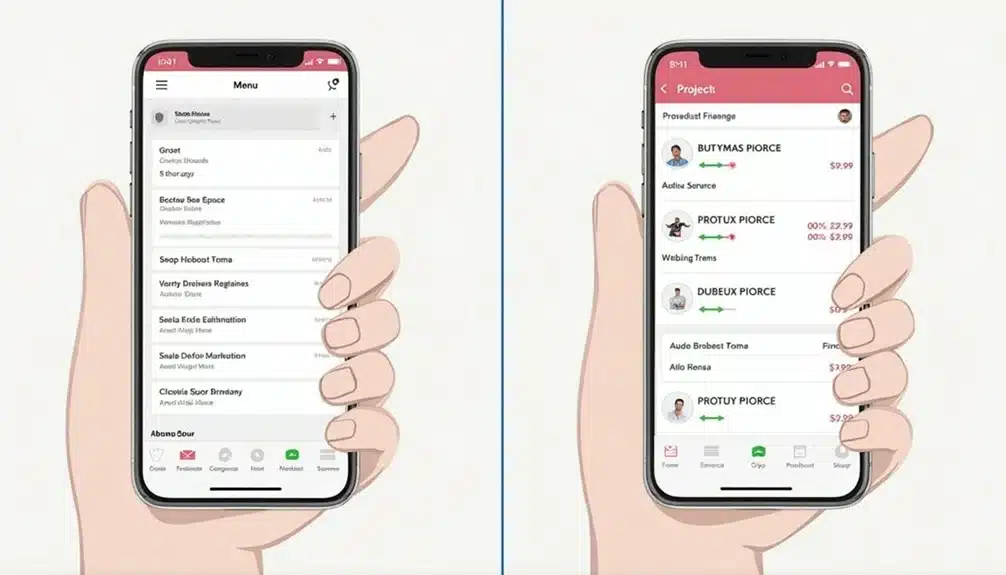
Three-quarters of online shoppers rely on their mobile devices to navigate e-commerce sites, making intuitive mobile navigation essential for driving conversions. You need to guarantee that your mobile site's navigation is seamless and user-friendly.
To achieve this, use thumb-friendly buttons that are large enough for users to tap without having to zoom in. Space them out adequately to prevent accidental clicks.
Implement intuitive gestures, such as swiping and tapping, to facilitate easy navigation. Make certain your menu is easily accessible and requires minimal taps to reach desired pages. Use clear and concise labels for your menu items, and prioritize your most important pages.
Streamline your navigation by reducing clutter and eliminating unnecessary options. Use icons and images judiciously, as they can slow down your site's load time.
Conduct user testing to identify navigation issues and optimize your site accordingly. By implementing these best practices, you'll improve your site's usability, enhance the shopping experience, and ultimately increase conversions.
Common Mobile Optimization Mistakes
Now that you've optimized your mobile navigation, it's time to tackle the common mistakes that can undermine your e-commerce site's performance.
You can't afford to overlook these errors, as they can lead to frustrated customers, lost sales, and a damaged reputation.
When it comes to mobile optimization, it's easy to make mistakes that can have a significant impact on your site's usability and conversion rates.
Here are three common mistakes to watch out for:
1. Insufficient image compression: Large images can slow down your site's loading times, leading to high bounce rates and lost sales.
Make sure to compress your images to reduce their file size without compromising quality.
2. Inadequate touch targets: Small touch targets can lead to accidental clicks and frustration.
Confirm that your buttons and links are large enough to tap easily, even on smaller screens.
3. Poor font sizing: Using fonts that are too small can make it difficult for users to read your content.
Use a clear, readable font and confirm that font sizes are optimized for mobile devices.
Testing for Mobile Friendliness

With your mobile optimization strategy in place, testing for mobile friendliness is vital to confirm that your e-commerce site provides a seamless user experience across various devices. You can't just assume your site looks and works great on mobile devices; you need to test it thoroughly.
Utilize mobile testing tools, such as Google's Mobile-Friendly Test or Responsinator, to check your site's mobile usability and identify potential issues.
Conduct usability testing with real users to gather valuable feedback on your site's mobile performance. This will help you pinpoint areas for improvement and make data-driven decisions to enhance the mobile user experience.
Don't rely solely on automated testing tools; user feedback is essential in guaranteeing your site meets the needs and expectations of your target audience. By combining mobile testing tools with user feedback, you'll be able to refine your mobile optimization strategy and create a site that drives conversions and boosts customer satisfaction.
Regular testing and iteration will help you stay ahead of the competition and confirm your e-commerce site remains mobile-friendly.
Conclusion
Your e-commerce site's mobile optimization is no longer a nicety, but a necessity. A mobile-friendly site can catapult you to the top of search engine rankings, while a non-optimized site can condemn you to obscurity. By prioritizing responsive design, mobile speed, and intuitive navigation, you can siphon traffic from competitors who are still stuck in the desktop era. Don't let mobile optimization be an afterthought – make it your competitive advantage.