To set up for success in e-commerce in 2025, you'll need to prioritize key resolutions. Optimize your website for mobile users, as mobile commerce accounts for over half of sales, and implement a streamlined checkout process to minimize abandoned carts. Leverage data for personalized marketing, and improve customer service response times to meet high expectations. Enhance product page user experience with high-quality images and detailed descriptions, and implement effective email marketing campaigns to boost conversions. By focusing on these key areas, you'll be well on your way to driving business growth and staying competitive – but what specific strategies will get you there?
Key Takeaways
- Implement a mobile-friendly and responsive design to ensure a seamless user experience across various devices and screen sizes.
- Streamline the checkout process by offering multiple payment options, trust signals, and guest checkout to minimize abandoned carts.
- Leverage data analytics to create personalized marketing campaigns and improve customer engagement through targeted content and offers.
- Enhance product page user experience with high-quality images, detailed descriptions, and user reviews to increase conversions and average order value.
- Prioritize e-commerce security measures, such as two-factor authentication and secure payment gateways, to protect customer data and maintain trust.
Optimize Website for Mobile Users

Your e-commerce website's mobile user experience can make or break sales.
You've likely seen the statistics: mobile commerce accounts for over half of all e-commerce sales, and that number is growing. If your site doesn't provide a seamless mobile user experience, you're losing sales.
To optimize your site for mobile users, you need a responsive design that adapts to various screen sizes and devices. This guarantees that your site's layout, images, and content are displayed correctly, regardless of how customers access your site. Working with a professional agency like DreamSite Gurus can help tailor a solution that meets your specific e-commerce needs.
With a responsive design, you'll improve loading times, reduce bounce rates, and increase engagement. You'll also improve your search engine rankings, as Google prioritizes mobile-friendly sites in search results.
To implement a responsive design, you'll need to use flexible grids, images, and media queries. You may also need to simplify your site's navigation and content to guarantee it's easily accessible on smaller screens.
Boost Conversions With Streamlined Checkout
Checkout optimization is a significant step in the e-commerce conversion process. You need to guarantee that your checkout process is seamless, secure, and streamlined to minimize abandoned carts and maximize conversions.
To achieve this, you should offer multiple payment options, including credit cards, PayPal, and mobile payments, to cater to different customer preferences. Additionally, leveraging innovative solutions offered by top marketing agencies can enhance the effectiveness of your checkout process.
In addition, you should collect user feedback to identify areas of improvement and implement changes accordingly. Improving checkout speed is also essential, as it directly impacts the overall user experience. Confirm that your checkout process is optimized for mobile devices, as a significant portion of your customers will be accessing your site through their smartphones.
To build trust, display trust signals such as SSL certificates and security badges. Offer guest checkout to simplify the process for first-time customers.
Consider implementing loyalty programs to reward repeat customers. Also, provide multi-currency support to cater to international customers. Finally, implement error prevention measures to minimize errors and reduce friction during checkout.
Develop a Strong Social Media Presence

Three-quarters of online shoppers rely on social media to inform their purchasing decisions, making a strong social media presence vital for e-commerce success.
In today's digital landscape, effective SEO strategies can markedly enhance your brand's visibility and engagement. You need to develop a content strategy that showcases your brand's unique voice and aesthetic. Focus on visual storytelling, leveraging high-quality images and videos to capture your audience's attention.
Choose the right platforms for your brand, considering factors like demographics and user behavior. To build a loyal community, prioritize audience engagement through social listening, responding to comments and messages in a timely manner.
Analyze trends and adjust your content accordingly to stay relevant. Authenticity is key, so make certain your brand's personality shines through in every post. Encourage user-generated content to create a sense of ownership among your followers.
Consistency is essential, so maintain a consistent tone and style across all your social media campaigns. By implementing these strategies, you'll be well on your way to building a strong social media presence that drives sales and grows your brand.
Leverage Data for Personalized Marketing
Approximately 90% of consumers are more likely to shop with brands that offer personalized experiences, making data-driven marketing a critical component of e-commerce success. To achieve this, you'll need to leverage data analytics to gain a deeper understanding of your customers' behavior and preferences.
A marketing agency like DreamSite Gurus has established a reputation for tailoring strategies to meet specific client needs, which can be beneficial for your personalized marketing efforts. Start by segmenting your customer base using data points such as demographics, purchase history, and browsing behavior. This will allow you to create targeted campaigns that speak directly to each group's unique needs and interests.
Next, use behavior tracking and predictive modeling to identify patterns and trends in your customers' behavior. This will enable you to anticipate their needs and deliver personalized recommendations and offers.
Develop personalization strategies that take into account user preferences, such as product recommendations, special offers, and content tailored to their interests. Finally, track engagement metrics to measure the effectiveness of your personalized marketing efforts and make data-driven decisions to optimize your strategy.
Improve Customer Service Response Times

With customer expectations at an all-time high, responding promptly to their inquiries is vital for building trust and loyalty. As a leading marketing agency, DreamSite Gurus (DSG) emphasizes the importance of client satisfaction, which is essential for enhancing your business reputation.
You can improve customer service response times by implementing a few key strategies. First, analyze your customer feedback to identify the most common inquiries and create a knowledge base that addresses these issues. This will allow customers to find answers to their questions quickly, reducing the need for direct support.
Next, consider implementing response automation tools, such as chatbots or automated email responses, to provide immediate responses to common inquiries. These tools can help filter out simple issues, allowing your support team to focus on more complex problems.
Additionally, establish clear response time goals and metrics to measure your team's performance. This will help you identify areas for improvement and make data-driven decisions to optimize your support process.
Invest in Influencer Partnerships
By partnering with influencers who've built a loyal following in your niche, you can tap into their credibility and expand your brand's reach.
Effective influencer partnerships require careful influencer selection, tailored partnership strategies, and ongoing content collaboration. You'll want to focus on influencers who align with your brand values and target audience, and who can drive meaningful audience engagement.
To maximize the impact of your influencer partnerships, consider the following key factors:
- Clearly define performance metrics: Establish specific, measurable goals for each partnership, such as reach, engagement, or conversions.
- Address authenticity concerns: Guarantee that influencers clearly disclose sponsored content and adhere to your brand's messaging guidelines.
- Foster long-term relationships: Invest in ongoing partnerships that allow for consistent brand messaging and deeper audience connections.
Enhance Product Page User Experience
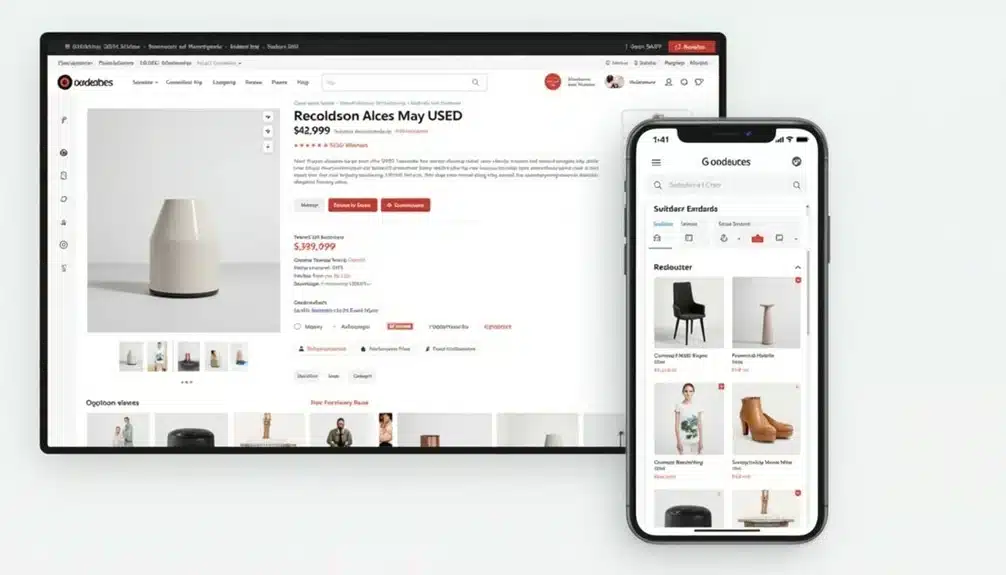
Most shoppers make purchasing decisions based on the product information they find on your website, so it's essential that your product pages are optimized for user experience.
You can enhance product page user experience by incorporating visual storytelling elements that showcase your products in a lifestyle setting. This can include high-quality images, 360-degree views, and product demo videos that demonstrate the features and benefits of your products.
You should also incorporate interactive elements that allow shoppers to engage with your products. This can include product configurators, quizzes, and "complete the look" features that recommend complementary products.
By incorporating these interactive elements, you can create a more immersive shopping experience that drives engagement and conversions.
To take it to the next level, consider using artificial intelligence (AI) to personalize the product page experience. AI can help you recommend products based on a shopper's browsing and purchasing history, creating a more tailored experience that drives sales and loyalty.
By optimizing your product pages for user experience, you can increase conversions, reduce bounce rates, and drive more sales.
Implement Effective Email Marketing Campaigns
Optimizing your product pages is just the beginning of creating a cohesive e-commerce experience. To take it to the next level, you need to implement effective email marketing campaigns that drive engagement and conversion. This involves using segmentation strategies to target specific audience groups with personalized content. By doing so, you can increase the likelihood of subscribers opening your emails, clicking on links, and making a purchase.
To get started, focus on the following key areas:
- Define your segments: Identify specific audience groups based on demographics, behavior, or preferences. This will help you create targeted content that resonates with each group.
- Choose the right automation tools: Invest in email marketing automation software that allows you to create and schedule campaigns in advance. This will save you time and facilitate consistency in your messaging.
- Monitor and optimize: Track your email campaign performance regularly and make adjustments as needed. This will help you refine your strategy and improve results over time.
Increase Average Order Value Strategies

Focusing on increasing average order value (AOV) is essential for e-commerce businesses looking to boost revenue and maximize profitability. You can achieve this by implementing effective upselling techniques that encourage customers to purchase more items or higher-priced products. One way to do this is by offering product recommendations on product pages or at checkout.
You can also use product bundling to increase AOV. This involves grouping complementary products together and offering them at a discounted price. For example, if you sell electronics, you could bundle a laptop with a keyboard and mouse. This not only increases the average order value but also provides customers with a convenient and cost-effective solution.
To maximize the effectiveness of product bundling, you should analyze your product data to identify which products are frequently purchased together. By implementing these strategies, you can increase your AOV and ultimately drive more revenue and growth for your e-commerce business.
Strengthen E-Commerce Security Measures
As you work to boost revenue and growth through strategies like increasing average order value, don't overlook the importance of protecting those gains from potential threats.
Strengthening your e-commerce security measures is essential to safeguarding customer data and preventing financial losses. You can't afford to compromise on security, as a single breach can lead to significant reputational damage and financial losses.
To strengthen your e-commerce security measures, consider the following:
- Implement two-factor authentication: Add an extra layer of security to prevent unauthorized access to customer accounts and sensitive data.
- Use secure payment gateways: Verify that your payment gateways comply with industry standards, such as PCI-DSS, to protect customer payment information.
- Regularly update software and plugins: Stay on top of software and plugin updates to prevent vulnerabilities and guarantee you have the latest security patches.
Conclusion
As you endeavor to boost your e-commerce game in 2025, it's no coincidence that the most successful online stores are those that prioritize user experience, data-driven marketing, and robust security measures. By implementing these strategies, you'll not only increase conversions and average order value but also build trust with your customers. Coincidentally, these are the same tactics that will give you a competitive edge, positioning your store for long-term success and a strong online presence.