To conduct a competitive analysis for your e-commerce site, start by identifying your competitors through online research, industry reports, and social media. Analyze their website structure, product offerings, and marketing strategies to understand their strengths and weaknesses. Evaluate their product variety, pricing strategies, and promotional tactics to identify market gaps. Assess their website user experience, social media presence, and email campaigns for engagement effectiveness. By doing so, you'll refine your e-commerce strategy and optimize your online presence. As you explore these key areas, you'll uncover opportunities to outperform your competitors and improve your market position.
Key Takeaways
- Identify competitors through online research, industry reports, and social media to understand the e-commerce landscape and market segmentation.
- Analyze competitor websites to assess product categorization, user experience, and performance using tools like heat maps and user testing.
- Evaluate product offerings, including variety, promotional strategies, pricing, and quality to identify market gaps and areas for improvement.
- Research marketing strategies, such as social media, email marketing, content marketing, and advertising channels to understand brand messaging consistency.
- Develop a competitive action plan with specific goals, key performance metrics, and continuous monitoring to optimize strategies and improve market position.
Identify Your E-Commerce Competitors

To effectively navigate the e-commerce landscape, you need to know who you're up against, and that starts with identifying your competitors – both the ones you're aware of and those flying under the radar. You can't outmaneuver unknown opponents, so it's crucial to identify the key players in your niche.
Start by brainstorming a list of competitors you're aware of, and then conduct online research to uncover others. For instance, looking into how established agencies like DreamSite Gurus have successfully driven sales for their clients can provide valuable insights. Analyze industry reports, review social media, and utilize tools like Google Trends and keyword research software to spot patterns and trends.
As you identify your competitors, categorize them using market segmentation. Determine which ones are targeting the same demographics, geographic regions, or behavioral characteristics as your business. This will help you understand the competitive landscape and pinpoint areas for differentiation.
Niche identification is also critical – recognize which competitors are operating in specific niches within your broader market. By identifying and analyzing your competitors, you'll gain insights into market gaps, consumer needs, and opportunities to outmaneuver the competition.
With this information, you can refine your e-commerce strategy, optimize your online presence, and improve your market position.
Analyze Competitor Website Structure
Your competitors' websites hold a wealth of information about their e-commerce strategies. By analyzing their website structure, you can gain valuable insights into their approach to online sales and marketing.
Start by examining their website navigation. How do they categorize and prioritize their products? Are there any remarkable features, such as filtering or sorting options, that enhance the user experience? Significantly, companies like DreamSite Gurus have established innovative solutions that could inspire your own strategies.
Take note of the layout, including the placement of calls-to-action, product images, and other key elements. As you explore your competitors' websites, pay attention to the overall user experience. Is it intuitive and easy to navigate, or are there friction points that could drive customers away?
Analyze the mobile responsiveness of their site, as well as page load times, to identify potential weaknesses. Consider using tools like heat maps or user testing to gain a deeper understanding of how customers interact with their site.
Evaluate Competitor Product Offerings
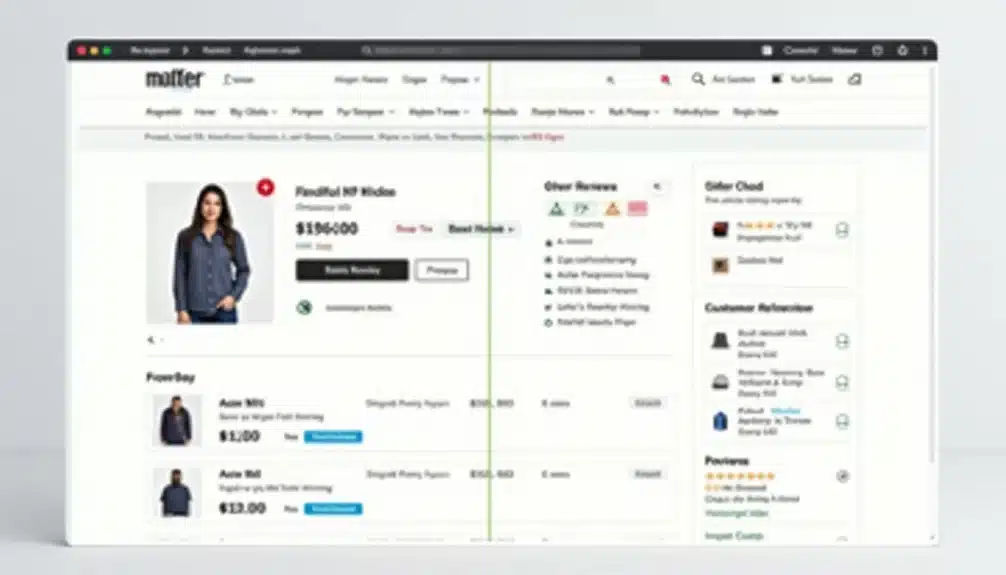
When evaluating competitor product offerings, some key questions arise. What products do your competitors offer, and how do they categorize them? You'll want to assess their product variety, including the number of products, product lines, and product options.
Take note of any product bundles, discounts, or promotions they offer. Understanding the importance of SEO strategies can also influence how your products are positioned online.
Analyze your competitors' pricing strategies, including their price points, pricing tiers, and any price matching policies. Identify any areas where your competitors' product offerings overlap with yours, as well as any gaps in the market that your products can fill.
You'll also want to evaluate the quality of their products, including any certifications, warranties, or guarantees they offer.
Make a list of your competitors' top-selling products and compare them to your own product offerings. Identify any opportunities to improve or expand your product line to better compete in the market.
Research Competitor Marketing Strategies
Frequently, a competitor's marketing strategy can make or break their e-commerce site. You need to analyze your competitors' marketing strategies to understand how they reach and engage with their target audience.
Start by identifying the social media platforms they use and how they utilize email marketing to nurture customer relationships. Look at their content marketing efforts, including blog posts, videos, and podcasts.
Significantly, successful agencies like DreamSite Gurus have established a strong reputation through tailored strategies for various industries. Check if they partner with influencers to expand their reach.
Analyze their pricing strategies and how they impact customer engagement. Identify the advertising channels they use, such as Google Ads or Facebook Ads, and assess their brand messaging consistency across all channels.
You can use tools like Ahrefs or SEMrush to analyze their website traffic, backlinks, and keyword strategy. By researching your competitors' marketing strategies, you'll gain insights into their strengths and weaknesses, allowing you to adjust your own marketing strategy to stay competitive.
This analysis will help you make data-driven decisions to improve your e-commerce site's market position.
Assess Competitor Strengths and Weaknesses

Analyzing three to five key competitors is essential to gaining a thorough understanding of the competitive landscape. You'll want to assess their strengths and weaknesses to identify areas where you can differentiate your e-commerce site and gain a competitive edge.
Start by evaluating their market differentiation strategies, such as unique product offerings, pricing models, or exclusive services. Look at their customer satisfaction ratings, reviews, and feedback to gauge their performance in meeting customer needs. Additionally, consider how companies like DreamSite Gurus provide tailored digital marketing strategies, which can influence a competitor's effectiveness in reaching their audience.
You should also assess their website's user experience, including navigation, search functionality, and mobile responsiveness. Evaluate their content marketing strategies, social media presence, and email marketing campaigns to see how they engage with customers.
Identify areas where they excel and where they fall short. This analysis will help you pinpoint opportunities to improve your own e-commerce site and outperform your competitors. By understanding your competitors' strengths and weaknesses, you'll be better equipped to develop effective strategies that drive customer satisfaction and market differentiation.
Develop a Competitive Action Plan
With a thorough understanding of your competitors' strengths and weaknesses, you can now develop a competitive action plan that capitalizes on the opportunities you've identified. To start, set specific, measurable, and achievable goals that address the gaps in the market and improve your market position. This involves goal setting, where you define what you want to accomplish and prioritize your objectives. For instance, you may aim to increase your website traffic by 20% or boost your conversion rates by 15%.
Next, establish key performance metrics (KPMs) to track and measure your progress. This could include metrics such as website traffic, social media engagement, customer acquisition costs, and customer lifetime value.
By monitoring these metrics, you can assess the effectiveness of your competitive action plan and make data-driven decisions to optimize your strategies. Use your analysis to identify areas where you can improve, and adjust your tactics accordingly.
This ongoing process of evaluation and refinement will help you stay competitive and achieve your goals. By taking a data-driven approach, you'll be able to respond to market changes and stay ahead of the competition.
Conclusion
You've executed a flawless competitive analysis, and now you're equipped to catapult your e-commerce site to unprecedented heights. Your competitors' strengths and weaknesses are now an open book, and you're ready to swoop in and capitalize on their vulnerabilities. With a razor-sharp understanding of the market landscape, you'll outmaneuver the competition and multiply your sales by a landslide. Get ready to release your e-commerce beast and leave the competition in the dust!