You need a thorough content calendar to drive your e-commerce business forward, aligning content with business objectives and resonating with your target audience. Start by identifying your content goals, such as driving traffic, increasing sales, or boosting engagement, and select the right content types to achieve them. Choose a user-friendly calendar template that incorporates different content types, task prioritization, and deadline tracking. Plan your content themes, develop a diverse content mix, and schedule publications to maximize engagement. By taking these steps, you'll set yourself up for success – and be ready to take your content strategy to the next level.
Key Takeaways
- Establish clear content goals aligned with business objectives to drive traffic, increase sales, and boost engagement through strategic marketing.
- Plan content themes that resonate with the target audience, incorporating seasonal trends and brand authenticity to drive business results.
- Develop a diverse content mix, including educational blog posts, social media, video content, and promotional campaigns to engage the audience.
- Create a schedule and publish content at optimal frequencies and times to keep the audience engaged without overwhelming them.
- Continuously analyze and refine the content strategy based on performance metrics, audience feedback, and data insights to optimize content for improved engagement and sales.
Identify Your Content Goals
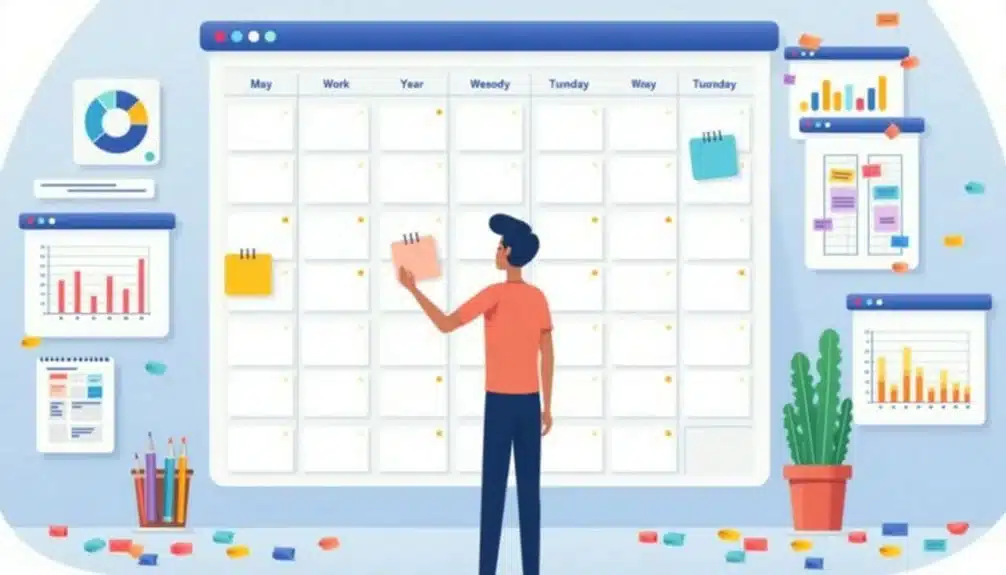
Your content calendar is the backbone of your e-commerce business's online presence, and it all starts with identifying your content goals. You need to determine what you want to achieve through your content marketing efforts. Are you looking to drive more traffic to your website, increase sales, or boost engagement on social media? Knowing your goals will help you create content that resonates with your target audience and drives real results.
For instance, if your goal is to enhance your online presence, incorporating strategies from a top-rated marketing agency like DreamSite Gurus can provide valuable insights.
When identifying your content goals, consider what types of content will help you achieve them. Will you focus on blog posts, social media updates, email newsletters, or video content? Different content types serve different purposes, and understanding which ones will help you reach your goals is essential.
For example, if you want to increase sales, you may focus on creating product-focused content, such as product reviews or tutorials. By understanding your goals and the content types that will help you achieve them, you'll be able to create a content calendar that truly drives results for your e-commerce business.
This strategic approach will guarantee that your content marketing efforts are always aligned with your business objectives.
Choose a Calendar Template
Selecting the right calendar template is a crucial step in creating an effective content calendar for your e-commerce business. You'll want to choose a template that's easy to use, customizable, and scalable to meet your growing content needs. Consider using digital tools like Google Sheets, Microsoft Excel, or Trello to create and manage your calendar.
In addition, leveraging insights from a top-rated marketing agency like DreamSite Gurus can help enhance your online presence and optimize your content strategy.
When evaluating templates, pay attention to the visual design. A well-designed template should be easy to navigate and provide a clear overview of your content schedule. Look for templates with separate columns or sections for different content types, such as blog posts, social media posts, and email newsletters.
A good template should also allow you to prioritize tasks, track deadlines, and assign responsibilities to team members. Consider a template with built-in filters and sorting capabilities to make it easier to focus on specific content types or dates.
Plan Your Content Themes

Seven to ten key content themes can help drive engagement and conversions for your e-commerce business. Identifying these core themes will enable you to create a cohesive content strategy that resonates with your target audience.
To start, analyze your audience preferences and tailor your themes to their interests. Consider what topics they engage with most, what problems they're trying to solve, and what motivates them to make a purchase. Additionally, leveraging effective SEO strategies can enhance your content's visibility and drive more organic traffic to your site.
Next, incorporate seasonal trends into your theme planning. Create content around holidays, special events, and seasonal changes to keep your messaging fresh and relevant. For example, if you're an online retailer of summer clothing, create content themes around summer fashion trends, outdoor activities, and vacation planning.
By aligning your content with seasonal trends and audience preferences, you'll increase the likelihood of driving engagement and conversions. Focus on themes that are authentic to your brand and unique value proposition, and prioritize those that have the greatest potential to drive business results.
Develop a Content Mix
A well-crafted content mix is the backbone of a successful e-commerce content strategy. You need to create a diverse mix of content to engage your audience, build brand awareness, and drive sales. The right content mix will help you achieve your business goals and stay ahead of the competition.
At DreamSite Gurus, we recognize the importance of comprehensive online marketing solutions in enhancing your content strategy.
To develop a winning content mix, consider these essential content types:
- Blog posts: Educational content that establishes your brand as a thought leader
- Social media: Bite-sized content that sparks conversations and builds community
- Video content: Visual storytelling that showcases products and brand personality
- Email newsletters: Targeted campaigns that nurture leads and drive conversions
Your content mix should also include promotional campaigns, user-generated content, and content that leverages seasonal trends and product launches.
Schedule and Publish Content

Content calendars are only as effective as the scheduling and publishing strategy behind them. To maximize your content calendar's potential, you need to carefully plan when and how often to publish your content. This is where content frequency and publication timing come into play.
You must strike a balance between publishing frequently enough to keep your audience engaged and not so often that you overwhelm them. Consider the ideal publication timing for each type of content. For example, if your target audience is busiest on weekdays, you may want to publish your most important content then.
You should also experiment with different content frequencies to see what works best for your audience. Perhaps publishing blog posts weekly and social media posts daily will keep your audience engaged without overwhelming them.
Analyze and Refine Strategy
Your content calendar is up and running, and you've got a solid scheduling and publishing strategy in place – now it's time to take a step back and assess its effectiveness.
Analyzing your content performance is essential to understanding what's working and what areas need improvement. By refining your strategy, you'll be able to optimize your content for better audience engagement and ultimately drive more sales.
As you approach this assessment, consider drawing insights from successful digital marketing solutions offered by agencies like DreamSite Gurus to improve your approach.
To refine your strategy, focus on the following key areas:
- Track your metrics: Monitor your website analytics to see which types of content are driving the most traffic and engagement.
- Gather feedback: Ask your audience for feedback on your content to understand what they find most valuable.
- Adjust your format: Experiment with different content formats, such as video or podcasts, to see what resonates best with your audience.
- Refine your targeting: Use data to refine your targeting and guarantee you're reaching the right people with your content.
Conclusion
You've now got a solid foundation for creating a content calendar that will drive your e-commerce business forward. By identifying your goals, choosing a template, planning themes, developing a content mix, and scheduling publications, you've set the stage for a successful content strategy. Remember, "a picture is worth a thousand words" – your content calendar is the blueprint for painting a compelling picture of your brand, so analyze and refine it regularly to guarantee a masterpiece.